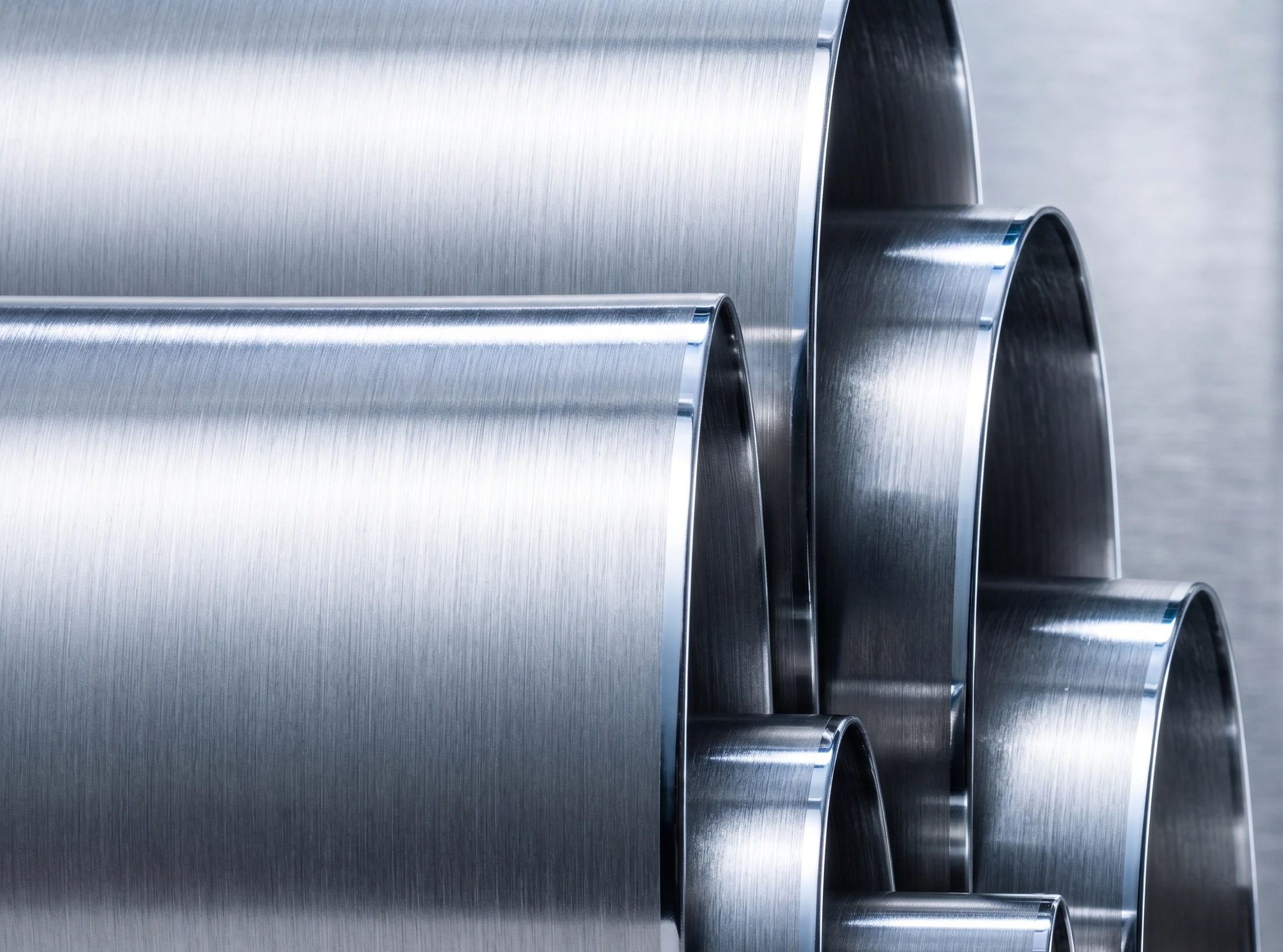
In high-speed stamping, spring manufacturing, and continuous roll forming, even minor variations in strip dimensions can disrupt production. A fraction of a millimeter deviation in thickness or a slight variation in width tolerance may lead to premature tool wear, feeding issues, machine downtime, and increased production costs.
For procurement managers and manufacturing engineers, selecting the right stainless steel precision strip involves much more than choosing a material grade. Dimensional tolerances, mechanical properties, edge quality, and coil configuration all play a critical role in maintaining reliable production and consistent product quality.
This guide explains the key factors to consider when specifying stainless steel precision strip for demanding industrial applications.
Precision begins with consistent dimensions throughout the entire coil. Automated production equipment relies on tight tolerances to ensure stable feeding, repeatable forming operations, and minimal mechanical stress on tooling.
At DMC NRG, we supply stainless steel precision strip across a broad range of dimensions to support everything from micro-engineering components to heavy industrial applications.
Depending on the strip grade, thickness, and final dimensions, precision slitting can achieve width tolerances down to ±0.03 mm, helping ensure stable feeding and repeatable production performance.
To ensure consistent dimensional accuracy and reliable performance, precision strips can be supplied in accordance with relevant European standards, including:
Compliance with these standards helps manufacturers achieve reliable results in laser cutting, precision stamping, roll forming, and automated production lines.
Dimensional accuracy alone is not enough. Mechanical properties determine how the material behaves during forming and how the finished component performs throughout its service life.
Materials can be supplied in accordance with EN 10088 for general industrial applications and EN 10151 for spring applications, with tensile strengths ranging from approximately 550 MPa to 1700 MPa.
Selecting the correct temper is essential for achieving the required balance between formability, strength, and fatigue resistance.
Choosing the appropriate temper reduces forming defects, improves product performance, and extends tool life.
Choosing the correct stainless steel grade depends on the application's corrosion resistance, mechanical strength, operating temperature, and wear requirements.
The following grades are commonly used across European manufacturing industries.
Selecting the appropriate grade at the design stage improves product performance while reducing long-term maintenance and operating costs.
Edge quality has a direct impact on production efficiency, tool life, and operator safety. Poorly slit material or excessive burr formation can increase tooling wear, reduce feeding reliability, and create safety risks during handling.
To meet different production requirements, precision strips are available with several edge conditions.
Slit Edge
Deburred Edge
Rounded (Safe) Edge
Available surface finishes include:
Where surface appearance is critical, laser-compatible PVC protective film can be applied to help minimize the risk of scratches during transport, storage, and manufacturing.
Optimized coil configuration is essential for uninterrupted production and efficient material handling.
DMC NRG offers coil specifications tailored to customer production equipment throughout Europe.
Precision strip can be supplied as:
Selecting the appropriate coil configuration reduces production interruptions and improves overall manufacturing efficiency.
Many production issues originate during material specification rather than manufacturing. To avoid costly mistakes, always ensure that you:
Carefully defining these parameters during procurement helps reduce downtime, improve product quality, extend tooling life, and lower overall manufacturing costs.
Selecting the right stainless steel precision strip involves much more than choosing a material grade. Dimensional tolerances, mechanical temper, edge condition, surface finish, and coil configuration all influence production efficiency, tooling life, and the quality of the finished product.
At DMC NRG, we combine European-grade material sourcing with qualified processing partners across Europe to supply precision strip tailored to each customer's manufacturing requirements. Our solutions provide consistent dimensional accuracy, reliable mechanical properties, and full compliance with applicable European standards.
Whether your application involves precision springs, automotive components, roll-formed profiles, medical devices, high-precision stamped parts, or other demanding industrial products, our technical specialists can help you identify the most suitable material specification for your production process.
Need technical advice or a tailored quotation for your next project? Contact the DMC NRG team to discuss your stainless steel precision strip requirements.

Explore expert tips, industry trends, and behind-the-scenes stories from the world of metal fabrication and manufacturing.

Learn how the EU Carbon Border Adjustment Mechanism (CBAM) affects steel and aluminium imports and what businesses must do to ensure compliance, avoid penalties, and maintain reliable supply chains.
Explore expert tips, industry trends, and behind-the-scenes stories from the world of metal fabrication and manufacturing.

We're here to be a partner who understands your challenges, creating portfolio of products, which can help you differentiate your business, lower cost and improve profitability - all in a sustainable manner.